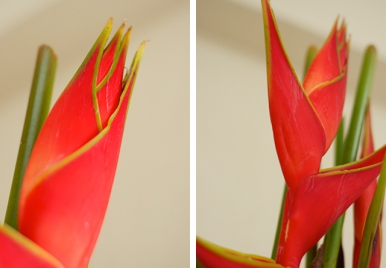
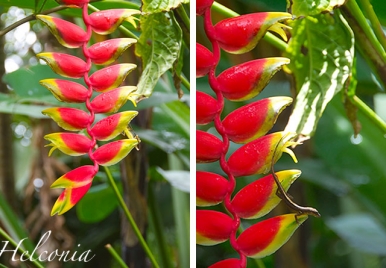
When you think of the Caribbean and the Tropics this flower is most certainly one that comes to mind! Heliconias would have to be one of the most vibrant and colourful species in Barbados. Also popularly known as lobster-claw, wild plantain or false bird-of-paradise, it is a beautiful flower with multi-color bracts (orange, yellow, red, pink, green, purple) and varied flower structure.
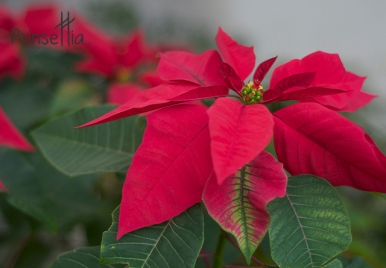
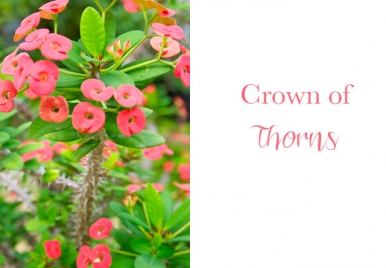
The Crown of Thorns, scientifically known as Euphorbia Milii, is a woody, spiny, climbing succulent shrub with shoots reaching a height of six (6) feet. Leaves are found primarily on young growth, and the plant may defoliate completely if put under moisture or temperature stress. The plant, flowers nearly all year, however in winter it is particularly admirable. The flowers are small and inconspicuous – “what?!” you must be thinking. No, those red components you see are, in fact, modified leaves or rather, bracts. Most Crown of Thorns plants in cultivation have red bracts.
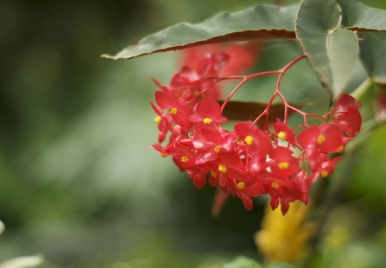
Scattered across Barbados are these interestingly shaped and edible (yes you read that correctly) flowers called Begonias. Found mainly in the colours of pink, red, white and purple, Begonias blossom best in filtered sunlight (for example under trees) and prefer a combination of warmth and moisture.
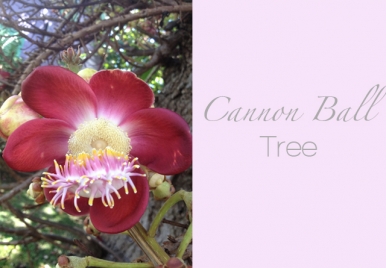
Today we are going to feature The Cannon Ball Tree which even as a local of Barbados, I did not know existed until last week when I was strolling through the Chattel Village in Holetown. This exotic tropical flowering tree is scientifically known as Couroupita guianensis. The Cannon Ball Tree is named after its cannon looking flowers which adorn the curved brown branches along the trunk of the tree. The exotic flowers exude orange, scarlet and pink colours, and form large bunches that measure up to 3 metres in length.
The Christmas season is here in Barbados and one of those things which pops up everywhere you look, are what we call Christmas Candles, the scientific name for this shrub is Senna alata. Now it is not exactly what it sounds like- The Christmas Candle is a flowering plant which you see around the island during our "winter". This plant can also be called the Candle Bush as the flowers look like a candle from the yellow coloring and straight/slightly curved shaped pod.
In notion of Independence month Loop Barbados has decided to compose a weekly post to celebrate the freedom of our island and all those individuals who made our liberty, pride and industry not only possible but also prominent.
These unique blooms, known as Birds of Paradise, can be seen scattered across Barbados, either growing wild or meticulously cared for. Coming from the strelitzia genre, the Bird of Paradise is a perennial plant that was first found in South Africa where it is mostly referred to as a Crane Flower.
Scattered around Barbados, especially in the lush fertile grounds of the country are these bell shaped flowers known as Angel's Trumpet, Datura or Moon Flowers. These flowers come in a variety of colours including whites, yellows, and purples, however the most common colour seen around Barbados is pink. The fruit is a spiny capsule which splits open to release numerous seeds that are then dispersed freely through pastures and fields. Despite it name - Angel's Trumpet - this plant belongs to part of the classic Witches' Weeds.
One of Barbados' most popular tropical flowers is the ginger lily (Alpinia purpurata). It can be seen in many gardens across the island such as Andromeda Gardens and Welchman Hall Gully, or even in a local's backyard. The ginger lily is a cone shaped flower that has attractive long floral bracts with lush green leaves growing plentifully around these flowers. There are two varieties- the red ginger lily which is known as the Jungle King and the pink ginger lily which is known as the Jungle Queen.
In celebration of the arrival of Spring (Yes, its okay to scream with excitement) we decided to compose a small post of a flower that too arrives in Spring here in Barbados. Scattered across our island are these beautiful, very tropical looking flowers bursting from lush and leafy trees. The common name for these flowers are Frangipani but they are known as Plumeria. The flowers bloom in a bunch all nestled beside one another and can be seen in two popular colors- white with vibrant yellow centers and then pink with the same vibrant yellow centers.